
Table of Contents
- Why 2026 Is the Year of Smarter, More Useful Home Gadgets
- The 4-Step Method to Spotting Trending Home Gadgets Before They Sell Out
- Innovative Kitchen Gadgets for Small Spaces That Earn Their Counter Space
- How to Evaluate Smart Home Technology: A Practical Checklist
- Where to Buy Trending Home Tech Without Getting Burned
- Smart Locks, Lighting, and Climate Control: The 2026 Essentials
- Your Shortlist for Trending Home Gadgets in 2026
- Final Verdict: Build a Gadget Wishlist That Matches Your Life
- Frequently Asked Questions
Last Updated: September 4, 2026
Why 2026 Is the Year of Smarter, More Useful Home Gadgets
The average home now contains more connected devices than ever, yet most people still buy gadgets the same way they did a decade ago: scroll, impulse-buy, and hope. That approach is expensive. Finding trending home gadgets 2026 requires a system, not a shopping spree.
At Velora, we track thousands of product launches each season, and the pattern for 2026 is clear: buyers are rejecting single-purpose novelties in favor of devices that integrate into a smart home ecosystem. The winning products solve a real friction point, whether that is saving counter space in a small kitchen or cutting energy consumption through adaptive lighting.
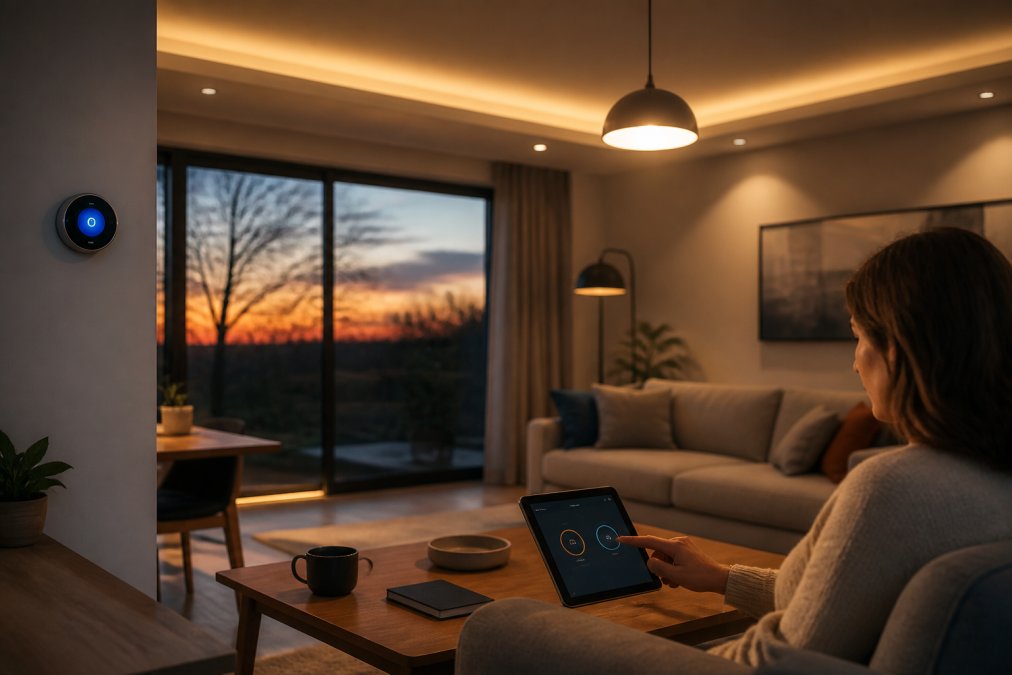
The 4-Step Method to Spotting Trending Home Gadgets Before They Sell Out
Spotting a genuinely trending home gadget before it sells out comes down to tracking signals, verifying quality, checking compatibility, and timing your purchase. Most people skip steps two and three, which is why they end up with gadgets that look great on TikTok but fail in daily use.
Step 1: Track Social Platforms for Real-Time Signals
Social platforms are where new product trends ignite. Watch short-form video tags and creator roundups for repeated mentions of the same device category. When several independent creators demonstrate the same gadget solving the same problem within a short window, that is a leading indicator of demand.
Step 2: Verify the Hype with Independent Reviews
The hype cycle moves faster than the truth. Before committing, cross-reference the product against independent review sites and forums where owners discuss long-term reliability. A common mistake is trusting only the polished launch videos; real user experiences surface in comment threads weeks later.
Step 3: Check for Ecosystem and Connectivity Compatibility
A trending gadget that does not talk to your existing setup becomes a paperweight. Check which wireless protocols it supports, such as Wi-Fi, Bluetooth, or Thread, and whether it works with your voice assistant or smart hub. Compatibility determines whether you get automated scheduling or another app cluttering your phone.
Step 4: Time Your Purchase for the Best Price
Trending items rarely stay at launch price. Watch the product over a few weeks and use price trackers to catch dips. Many early adopters overpay because they fear stockouts; in practice, most successful products get restocked, and waiting a few weeks often saves a meaningful amount.
Innovative Kitchen Gadgets for Small Spaces That Earn Their Counter Space
The best innovative kitchen gadgets for small spaces do one thing exceptionally well and take up almost no room. For apartment dwellers, the enemy is clutter, so any device must justify its footprint with daily utility rather than occasional novelty.
Compact design matters less than workflow integration: a gadget that requires constant setup and teardown will get abandoned. The winning kitchen tech for 2026 focuses on speed and cleanup, because busy professionals will not hand-wash a complicated attachment to save two minutes.
How to Evaluate Smart Home Technology: A Practical Checklist
Evaluating smart home technology requires a practical checklist that prioritizes interoperability, security, and long-term support over flashy specs. Score each candidate on four criteria before purchase.
| Evaluation Criteria | What to Check | Red Flag to Avoid |
|---|---|---|
| Ecosystem Fit | Works with your existing smart hub and voice assistant | Requires a separate proprietary app with no integrations |
| Security Protocols | Offers data encryption and two-factor authentication | No firmware update history or vague privacy policy |
| Power Management | Clear energy consumption data and standby modes | Always-on device with no sleep setting |
| Long-term Support | Company issues regular firmware updates | Product abandoned shortly after launch |
What to Ignore During Your Evaluation
Ignore marketing claims about artificial intelligence that do not translate to a specific, useful behavior. Ignore "smart" labels on devices that merely connect to Wi-Fi without adding automation value. And ignore aesthetic pressure: a gadget that is difficult to operate will not get used, regardless of how it looks on the counter.
Where to Buy Trending Home Tech Without Getting Burned
Choosing where to buy trending home tech is as important as choosing what to buy, because the source determines your recourse if the product fails. The safest route is a curated retailer that has already vetted the product for quality and relevance, rather than a marketplace where counterfeit or dropshipped items with fake ratings are common.
When you buy from a source that tests and stands behind its catalog, you get a layer of quality control that algorithmic marketplaces do not provide. Look for retailers with transparent return policies and responsive support.
Smart Locks, Lighting, and Climate Control: The 2026 Essentials
The foundational trending home gadgets for 2026 are smart locks, adaptive lighting, and climate control devices, because they deliver the highest return on convenience and energy savings. But the category leaders have moved beyond basic app control into specific, measurable behaviors.
Smart Locks: Beyond Keypad Convenience
The current generation of smart locks is defined by two competing access standards: the Z-Wave and Zigbee protocols that require a hub, and the newer Wi-Fi and Thread direct-connect models that do not. For renters, the key differentiator is the August Wi-Fi Smart Lock (4th Gen), which retrofits over your existing deadbolt, preserving your landlord's key while adding auto-unlock geofencing and a door sensor that triggers automations. For homeowners, the Schlage Encode Plus is the standout because it is one of the few locks with built-in Thread support, meaning it can join a Matter-enabled ecosystem without a separate bridge.
A critical trade-off most buyers miss is battery life versus connectivity. Wi-Fi locks draw more power and often require battery changes every 3-6 months, while Thread and Z-Wave locks can run a year or more on a single set of AAs (peer-reviewed research). In a larger home where the lock is far from your router, a Thread or Z-Wave model will be more reliable than a Wi-Fi unit that struggles with signal penetration through multiple walls.
Adaptive Lighting: The Shift to Tunable White and Presence Sensing
The 2026 lighting trend is not about color-changing RGB strips; it is about tunable white light that mimics the sun's arc. Philips Hue's new Centura recessed lights and the Nanoleaf Skylight both support tunable white temperatures from a warm 2000K to a crisp 6500K, which you can schedule to shift automatically. The mechanism is simple: cooler light in the morning to suppress melatonin and boost alertness, warmer light in the evening to prepare your body for sleep.
The more practical innovation, however, is occupancy-based dimming. Lutron's Caseta line now offers a sensor that works with its smart dimmers to turn lights off when a room is empty for more than five minutes. This is not a gimmick; the U.S. Department of Energy estimates that lighting accounts for roughly 15% of a typical home's electricity use, and occupancy sensors cut that waste by eliminating the most common failure: leaving lights on in unoccupied rooms.
Climate Control: Learning Thermostats and Zoned Mini-Splits
Climate control in 2026 is split between two approaches. The first is the software-driven learning thermostat, led by the ecobee Smart Thermostat Premium and the Google Nest Learning Thermostat (4th Gen). The ecobee distinguishes itself with a built-in air quality monitor that tracks volatile organic compounds and carbon dioxide, triggering your HVAC fan automatically when readings spike. The Nest's advantage is its new Soli radar sensor, which detects occupancy in the room where it is mounted, allowing it to skip the eco temperature setback when you are sitting still on the couch.
The second approach is hardware-based zoning through ductless mini-split heat pumps. These systems, which are eligible for the federal 25C tax credit (up to $2,000) under the Inflation Reduction Act, let you heat or cool individual rooms rather than the whole house (energystar.gov). The smart integration comes from units like the Mitsubishi Kumo Cloud adapter, which adds Wi-Fi control and scheduling to mini-splits that otherwise lack connectivity. If you have a room that is always too hot in summer or too cold in winter, a smart mini-split is a more effective fix than a smart thermostat fighting a leaky duct system.
Your Shortlist for Trending Home Gadgets in 2026
Building a shortlist of trending home gadgets for 2026 means narrowing your candidates to those that pass the evaluation checklist and fit your actual routine. A practical method is to list your top three daily annoyances at home and search for gadgets that directly address them. But the single most important filter that most buyers skip is ecosystem compatibility.
The Interoperability Test: Matter, Thread, and Your Hub
Before any gadget earns a spot on your shortlist, run it through the interoperability test. The 2026 standard is Matter, a connectivity protocol backed by Apple, Google, Amazon, and Samsung that lets devices from different brands communicate locally without cloud dependencies (csa-iot.org). The companion radio technology is Thread, a low-power mesh network that keeps Matter devices responsive even when your internet goes down.
Here is the practical test: does the product list Matter support on its spec sheet? If yes, it will work with your existing Apple Home, Google Home, or Amazon Alexa setup without a proprietary bridge. If the product only supports Wi-Fi and its own app, it will still function, but you lose the ability to create cross-brand automations. For example, a Matter-enabled smart plug can trigger a Matter-enabled light to turn on when motion is detected, even if the plug is from Eve and the light is from Philips Hue. A non-Matter plug from a no-name brand cannot do that.
A common pattern among 2026 buyers is the frustration of buying a device that requires a second hub. The Aqara FP2 presence sensor, for instance, is excellent at detecting micro-movements, but it requires the Aqara Hub to function. If you already have an Amazon Echo Hub or an Apple TV 4K as your Thread border router, you do not need that extra hub for Matter-certified devices. Check the box for the Thread logo and the Matter logo before you check the price.
Three Gadgets That Pass the Ecosystem Test
For content creators and remote workers, the magnetic selfie light at $29.99 earns its place by attaching in seconds for video calls and streaming. It is a standalone accessory that does not need to join your network, so compatibility is a non-issue. The portable small projector at $79.99 turns any wall into a movie screen without permanent installation. It connects over HDMI or screen mirroring, which means it works with any phone, laptop, or streaming stick you already own.


For a gadget that actually joins your ecosystem, consider a Matter-certified smart plug as your first building block. A $15 to $25 smart plug from a brand like Eve (Thread-based) or TP-Link Kasa (Wi-Fi) turns any dumb appliance, a space heater, a coffee maker, a lamp, into a scheduled or voice-controlled device. It is the lowest-cost way to test whether you will actually use automation before you invest in a $200 smart lock or a $250 thermostat.
| Gadget | Price | Ecosystem Role | Key Feature |
|---|---|---|---|
| Magnetic Selfie Light | $29.99 | Standalone accessory | 6 lighting modes, MagSafe attach |
| Portable Small Projector | $79.99 | Standalone (HDMI/mirroring) | 720p in a compact build |
| Matter Smart Plug | $15-$25 | Thread or Wi-Fi node | Adds scheduling to any appliance |
Final Verdict: Build a Gadget Wishlist That Matches Your Life
The real challenge with trending home gadgets is not finding them; it is resisting the ones that do not fit your life. A gadget that solves a problem you do not have is clutter, no matter how viral it goes. The method outlined here filters out the noise so your wishlist reflects genuine needs.
Curated sources do the filtering for you. Velora specializes in discovering innovative and stylish essentials across home, technology, and lifestyle categories, saving you the effort of endless searching across multiple platforms. Our catalog focuses on clever, useful finds at affordable prices, so you can shop with confidence that each item has already passed the relevance test.
Frequently Asked Questions
What are the top trending home gadgets for 2026?
The biggest trends for 2026 center on automation and energy efficiency. Smart thermostats, robot vacuums with self-emptying bases, and adaptive lighting systems lead the pack. For smaller budgets, magnetic phone lights and portable projectors are gaining traction for their versatility. The key is to look for devices that solve a specific problem you have, rather than buying tech for the sake of it. Focus on items that integrate with your existing ecosystem, whether you use Alexa, Google Home, or Apple HomeKit.
How do I know if a trending gadget is actually high quality?
Look past the marketing and check for independent verification. Search for reviews from tech publications and, more importantly, read the 2- and 3-star reviews on retail sites. Those often reveal common flaws that 5-star ratings hide. Also, check if the manufacturer provides firmware updates. A gadget that receives regular updates is a safer bet for long-term reliability than one that is abandoned after launch. Finally, confirm the materials and build quality from user photos, not just professional renders.
Where can I find reliable reviews and comparisons for new home tech?
Start with trusted tech sites like The Verge, Wirecutter, and CNET for in-depth testing. For real-world usage, YouTube reviews from creators who actually buy the product themselves are often more honest than sponsored content. To see how a gadget holds up over time, search Reddit communities like r/homeautomation or r/gadgets for long-term owner feedback. Cross-referencing a professional review with several user experiences gives you a complete picture before you spend your money.
What should I prioritize when looking for innovative kitchen gadgets for small spaces?
Prioritize multi-functionality and compact storage. A single gadget that performs three tasks, like an air fryer that also dehydrates and roasts, saves valuable counter space. Measure your cabinet and counter dimensions before you buy, and look for items with cord management. Also consider how easy it is to clean; gadgets with too many nooks and crannies often end up unused. Stick to tools that address your most frequent cooking habits, not the ones that promise the most features.
Finding the right gadget requires patience, but the payoff is a home that works smarter. Start with the friction points in your daily routine, apply the evaluation checklist, and let a trusted curator handle the trend-spotting. Get started with Velora and build a shortlist of trending home gadgets that actually earn their place in your home.
This article was written using GrandRanker